

No matter where you live, water is a potential hazard that can leak into your structure and cause plenty of damage. There are seasonal factors to consider; spring often brings an increase in melting water, which may cause basement leaks. For such reasons, a sump pump is an important part of a functioning household or business.
First, what is a sump pump and how does it work?
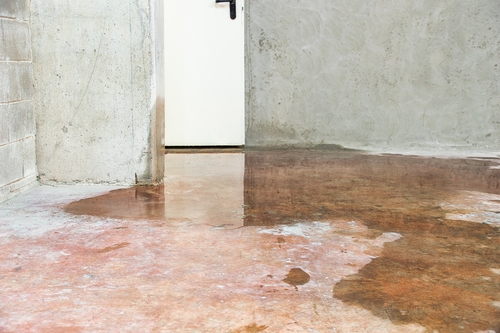
Then, what happens if your sump pump fails? From major basement flooding to small basement water leaks, a failed sump pump can wreak havoc on your home or business.
What's a Sump Pump?
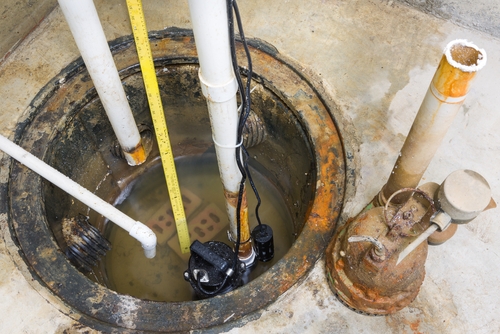
A sump pump is a mechanical pump, often placed in a basement or crawlspace, to remove liquid usually water, as it accumulates in a sump pit. As the water level rises, it trips a float switch, turns on the pump, and sends the excess water away from the structure.
There are four types of sump pumps:
- Combination sump pumps are ideal for significant flooding or large areas.
- Pedestal sump pumps, typically cheaper and noisier than other sump pumps.
- Submersible sump pumps run quietly, making them a good choice for installation near living areas. They’re usually more expensive than other types.
- Battery backup sump pumps continue to operate if there’s a power outage.
Sump pumps vary in size. The required horsepower depends on factors like the depth of the basement, area of drainage, and the depth to groundwater. The average household uses a sump pump with 1/3 horsepower, though it’s a good idea to consider a 1/2 horsepower pump. A sump pump that’s too small, or too powerful, can lead to the failure of the pump.
Do All Basements Need a Sump Pump?
Not every basement needs a sump pump. It largely depends on where you live. If any of these apply to you, there’s a good chance your basement needs a sump pump:
- You live in a flat area, or location that sits low to the ground.
- You live in an area where snow and rain are common.
- You live in the basement of a property.
- Your property has a basement.
- Part of your property is underground.
- Your property has a history of floods.
- Your basement is continuously wet.
Why Do I Need a Sump Pump?
Sump pumps help keep your basement dry and protect the home from water damage, foundation problems, and mold growth. In the event of intense storms, flooding, melting snow, or other excessive moisture, these machines make sure your home or business stay free of flood and storm water.
A faulty sump pump could spell disaster for your property, so routine maintenance and check-ups are important.
How Does a Sump Pump Work?
Usually located in the lowermost part of a home or building, sump pumps operate by collecting water in a pit beneath the pump. When water reaches a designated point in the pit, it trips a float sensor which turns on the pump, and the pump begins removing the water to a location outside the property, away from the foundation. Pipes that carry the water away have check valves to ensure the water does not flow back into the property.
Will a Sump Pump Keep My Basement Dry?
If your sump pump is maintained regularly and in proper working condition, it should keep your basement dry in the event of excessive water. Age, maintenance, upkeep of parts, inclusion of battery backup, and other factors will impact the effectiveness and lifespan of your sump pump.
What Makes a Sump Pump Fail?
There are several reasons why a sump pump might leak or fail altogether:
- Improper installation.
- Clogged discharge pipe.
- Sump pit damaged or the wrong size.
- Seal and gasket problems.
- Float switch malfunction.
- Faulty wiring or other electrical issues.
SERVPRO Can Help
SERVPRO offers a wide variety of cleanup and restoration services, services such as fire damage restoration, mold remediation and biohazard cleanup. Our technicians are committed to returning your property to pre-loss condition, making it “Like it never even happened.”
To find out more, contact us today or visit our FAQ and Glossary.