

The prevalence of greasy foods means it is important to keep a close eye on your cooking area. A distracting phone call or crying baby could be enough to pull you away from the kitchen, just as a grease fire erupts in the middle of dinner duty. The last thing you want is to inadvertently put yourself, family, or employees in danger through the simple act of cooking.
What is a Grease Fire?
Simply put, when cooking oils become too hot, a grease fire can occur. Three elements must be present:
- Heat source.
- A spark.
- Oxygen.
Grease fires can occur in an instant, when you least expect it. Common causes include:
- Leaving food unattended while cooking.
- Wearing loose-fitting attire while cooking.
- Placing combustibles too close to a heat source.
- Turning temperatures too high.
According to the U.S. Fire Administrati, cooking fires are the leading cause of home fires and injuries. From 2017 to 2019, fire departments in the U.S. responded to an estimated average of 187,500 cooking fires in residential buildings. These fires caused some alarming statistics:
- 165 deaths.
- 3,325 injuries.
- $444 million in property loss.
A grease fire can quickly grow out of control. If you can’t put out the fire in a few seconds, leave the house immediately and call 911.
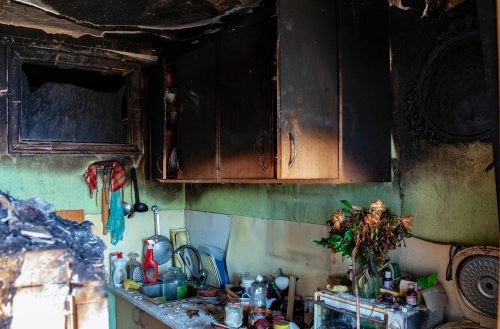
How Can I Safely Extinguish a Grease Fire?
A small flame can become a major fire in less than 30 seconds, so it’s vital to know how to safely extinguish a grease fire. Here are some do’s and don’ts for putting out a small grease fire.
Do’s:
- Turn off the burner as soon as possible. It’s recommended that you wear oven mitts to help protect your hands.
- Put a metal lid or cookie sheet over the fire. A tight-fitting lid removes the oxygen the flame needs to survive. Leave the lid or cookie sheet on the fire until the metal is cool and the fire’s extinguished. (Use a metal lid since a glass lid can break.)
- Smother the grease fire with another pan that nestles inside the pan on the stovetop. This removes the oxygen and keeps the fire from spreading.
- Pour baking soda or salt onto the fire. This is effective on a small fire. (It’s a good idea to keep these available whenever you cook.)
- Spray the fire with a Class B or Class K fire extinguisher. Grease fires are considered Class B or Class K fires, so only spray the fire with one of those. This can contaminate your kitchen and should be a last resort.
Don’ts:
- Do NOT extinguish a grease fire with water or a wet towel. This can cause the fire to splatter and spread.
- Do NOT use flour, baking powder, or sugar to smother the fire. Flour and baking powder don’t contain the same attributes as baking soda and can ignite, making the fire worse. Sugar has a natural flammability and can make the fire disseminate.
- Do NOT remove the pan from the burner or place it in the sink. The oil can splash and cause a burn hazard. Even if the fire is smothered, do not maneuver the pan into the sink.
- Do NOT remove the lid from the pan. If you try to remove the lid from the pan, the fire can re-ignite.
How Can I Get Rid of the Grease Fire Smell?
A grease fire can be dangerous and leave a pungent smell, so it’s imperative to take prompt action and know how to get rid of the offending odor. A few DIY removal tips:
- Maintain ventilation to the outside.
- Pour distilled vinegar in bowls, and place them around the area to capture odors.
- Wipe down contents (cabinets, appliances, and other hard surfaces) with a damp towel submerged in vinegar to remove the smoky, burnt smell.
- Wash all affected accessories immediately (pillows, clothes, etc.).
- Sprinkle dry baking soda in affected areas to absorb the smell.
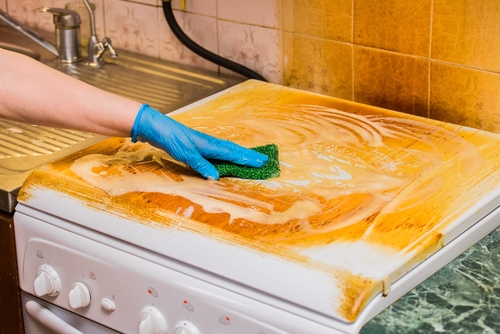
Tips for Cleaning Up After a Grease Fire
After a grease fire has been extinguished, there are a few things you can do to clean the affected area:
- Ventilate your home as much as you can.
- Wet debris down to avoid inhaling dust particles.
- Wearing rubber gloves, fill a bucket with one gallon of warm water. Add 4 to 6 tablespoons of trisodium phosphate (TSP) and one cup of bleach. Mix well.
- Place a towel into this cleaning solution and use it to clean soot and smoke stains from walls, furniture, and ceilings. Repeat as necessary.
- Saturate a second towel with clean water. Wipe down any surfaces you cleaned with the solution to eliminate any evidence of the chemicals. Dry surfaces with a clean, dry cloth.
- Wash (with soapy water), rinse and polish kitchenware such as pots and pans.
- If necessary, consult a professional (like SERVPRO) for recommendations on replacing drywall, insulation, or other structural components.
When Should I Contact SERVPRO?
To make sure the grease fire is handled properly and professionally, contact the fire damage restoration and odor removal experts at SERVPRO®. Taking prompt action can help prevent secondary damage.
We’re equipped with the right tools and resources to get your residential and/or commercial property back to pre-loss condition to help make the damage “Like it never even happened.”